


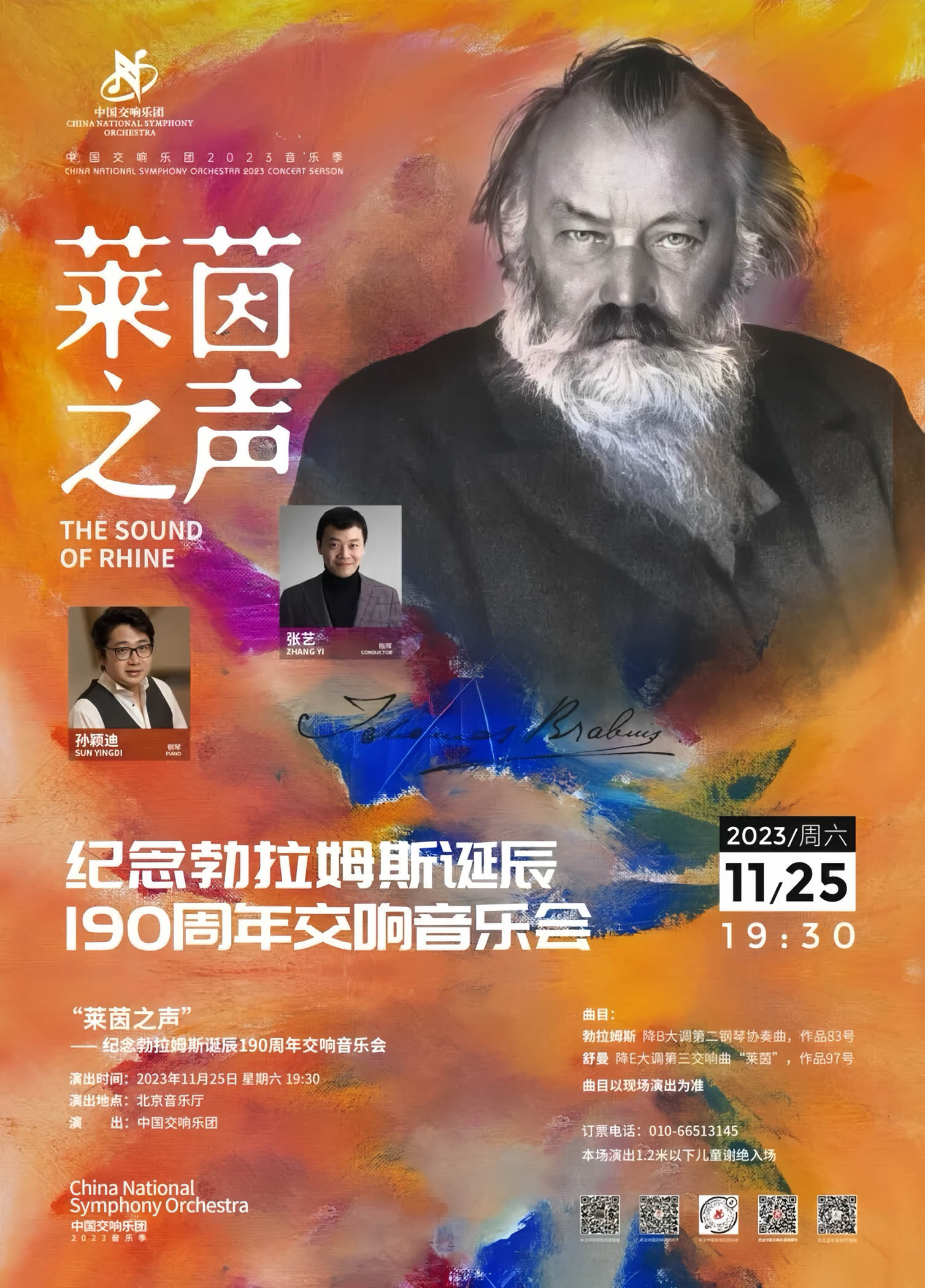
The Sound of Rhine
Yingdi Sun × Yi Zhang × China National Symphony Orchestra
Brahms at 190 – A Celebration of Passion and Poise
Overview
In tribute to the 190th anniversary of Johannes Brahms’s birth, pianist Yingdi Sun joins conductor Yi Zhang and the China National Symphony Orchestra to present an evening of symphonic grandeur and intimate lyricism.
The concert — titled “The Sound of Rhine” — brings together two masterpieces shaped by the romantic spirit of the German heartland: Brahms’s Piano Concerto No. 2 in B-flat Major, Op. 83, and Schumann’s Symphony No. 3 in E-flat Major, Op. 97 “Rhenish.”
Program
Johannes Brahms (1833 – 1897)
Piano Concerto No. 2 in B-flat Major, Op. 83
Composed in 1881, Brahms’s Second Piano Concerto stands as one of the most monumental works of the Romantic repertoire. Unique in its four-movement form, the concerto expands the boundaries of dialogue between soloist and orchestra. Rather than asserting dominance, the piano converses with the ensemble as an equal partner — prompting later critics to call it “a symphony with piano obbligato.”
Within its pages lie both the grandeur and tenderness so characteristic of Brahms: a fusion of noble strength and lyrical warmth, expressed with profound sincerity and emotional depth.
Robert Schumann (1810 – 1856)
Symphony No. 3 in E-flat Major, Op. 97 “Rhenish”
Schumann’s final symphony is a musical portrait of the Rhine — majestic, poetic, and filled with human warmth. Inspired by the landscapes and spiritual aura of the Rhineland, the work captures the optimism and inner poetry of the composer’s mature years, balancing classical form with deeply personal expression.
On Brahms, Yindi Sun remarked:
“Brahms could well be considered the supreme master of the piano miniature. Especially in his late works — using the fewest notes, within the briefest forms — he conveys infinite depth and emotion. In his music I sense the spirit of Su Dongpo and Nalan Xingde — both grand and subtle, both heroic and humane.”
Artists
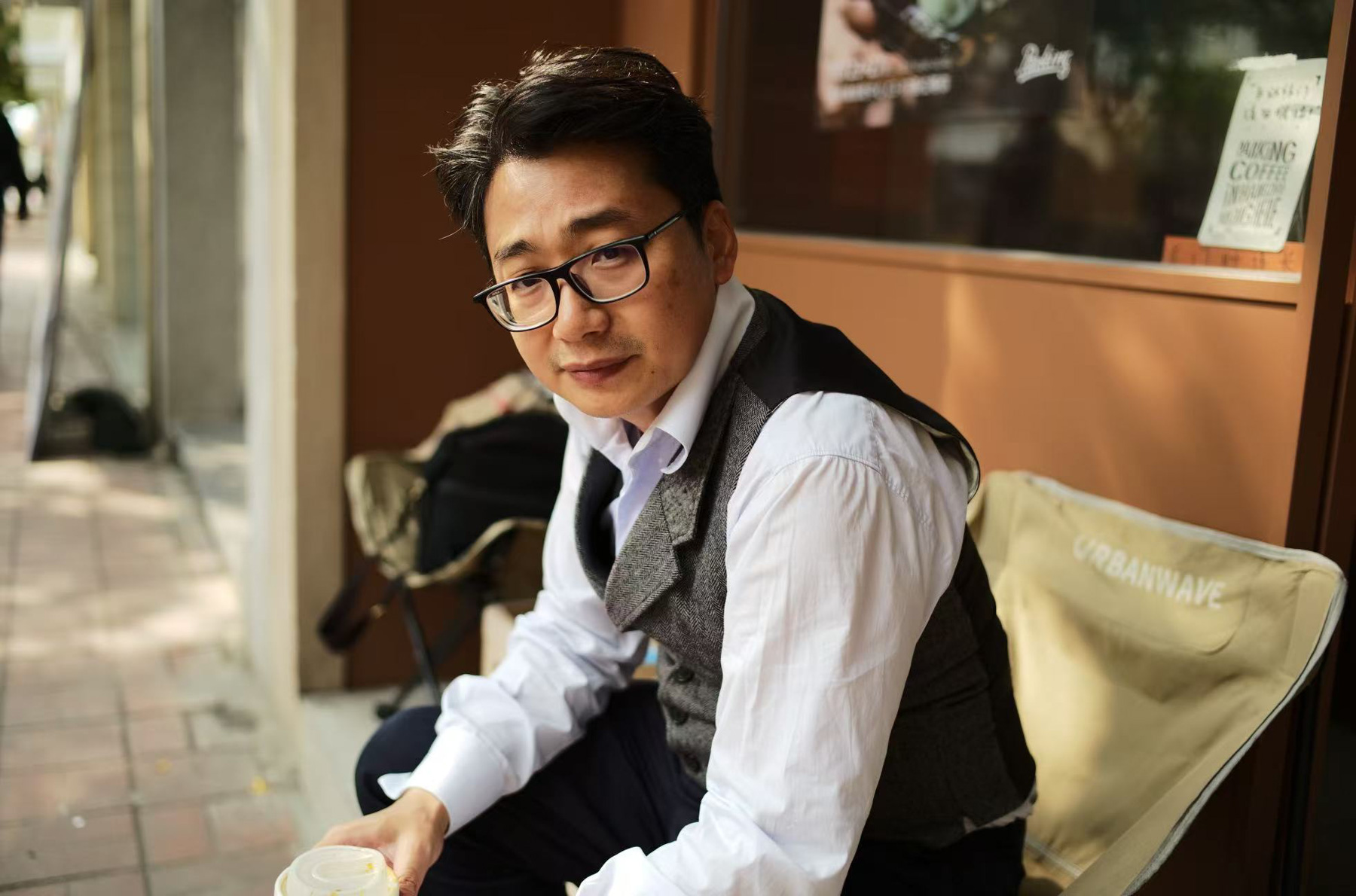
Yingdi Sun — Piano
Winner of the First Prize at the 7th International Franz Liszt Piano Competition, Yingdi Sun is admired for his combination of poetic sensibility and commanding virtuosity. A graduate of the Shanghai Conservatory of Music, he has appeared with the Royal Concertgebouw Orchestra, London Philharmonic Orchestra, and many of China’s leading orchestras.
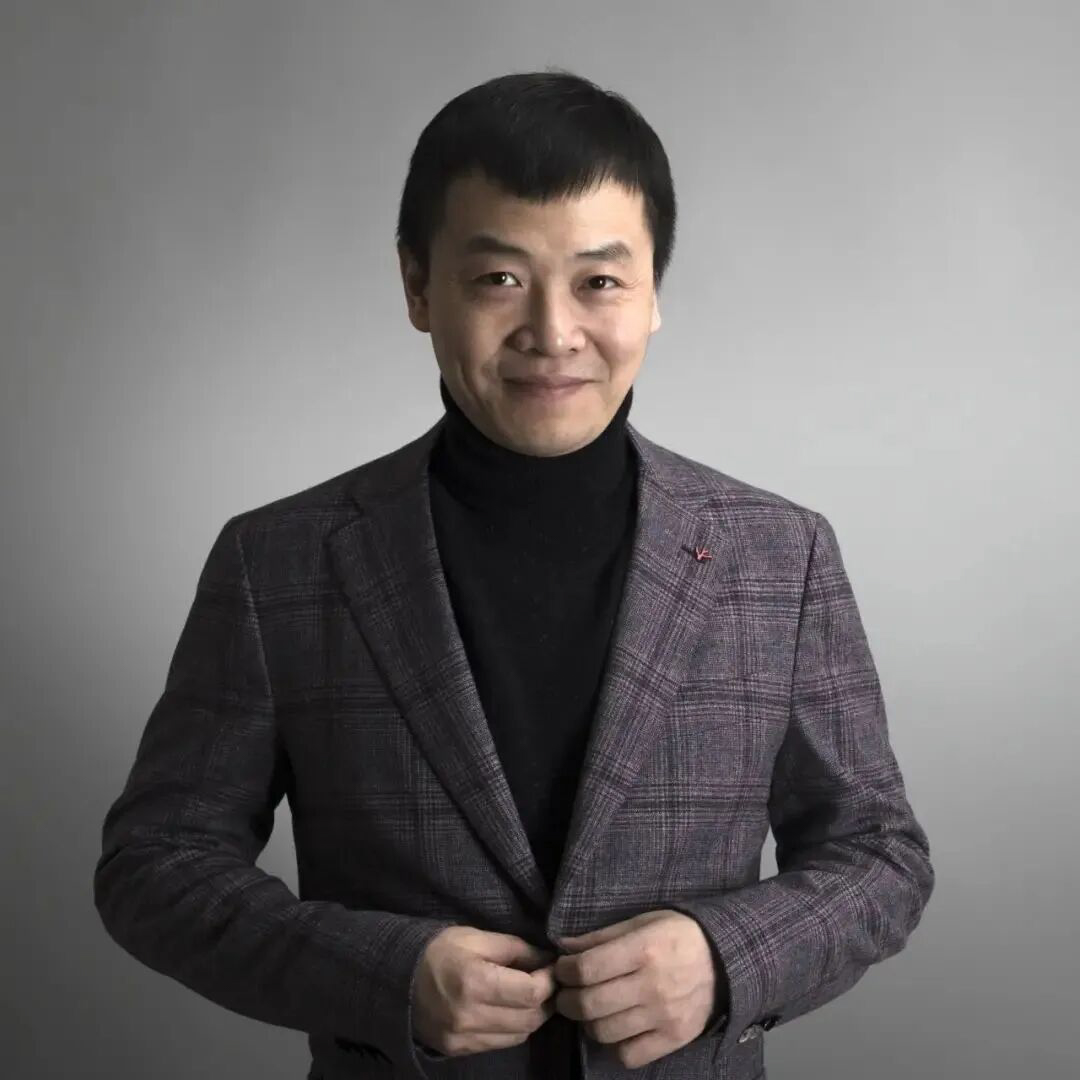
Yi Zhang — Conductor
Music Director of the China National Ballet Orchestra, Artistic Director of the Shanghai Philharmonic Orchestra and the Zhejiang Symphony Orchestra, and Distinguished Professor at the Zhejiang Conservatory of Music.
A recipient of the State Council’s Special Government Allowance and the Four Batches Talents Award by China’s Publicity Department, Zhang Yi is one of the country’s most influential conductors.
He has collaborated with leading ensembles worldwide — including the China Philharmonic, Shanghai Symphony, London Philharmonic, German Radio Philharmonic, Malaysian Philharmonic, Swedish Royal Opera, and others — and with artists such as Leonidas Kavakos, Emmanuel Pahud, Jean-Yves Thibaudet, Sarah Chang, and Lang Lang.
In addition to a wide symphonic repertoire, Zhang has conducted the Chinese premieres of major works by Stravinsky, Mozart, Rossini, Ye Xiaogang, and Chen Qigang, and recorded extensively for labels including WERGO and Decca.
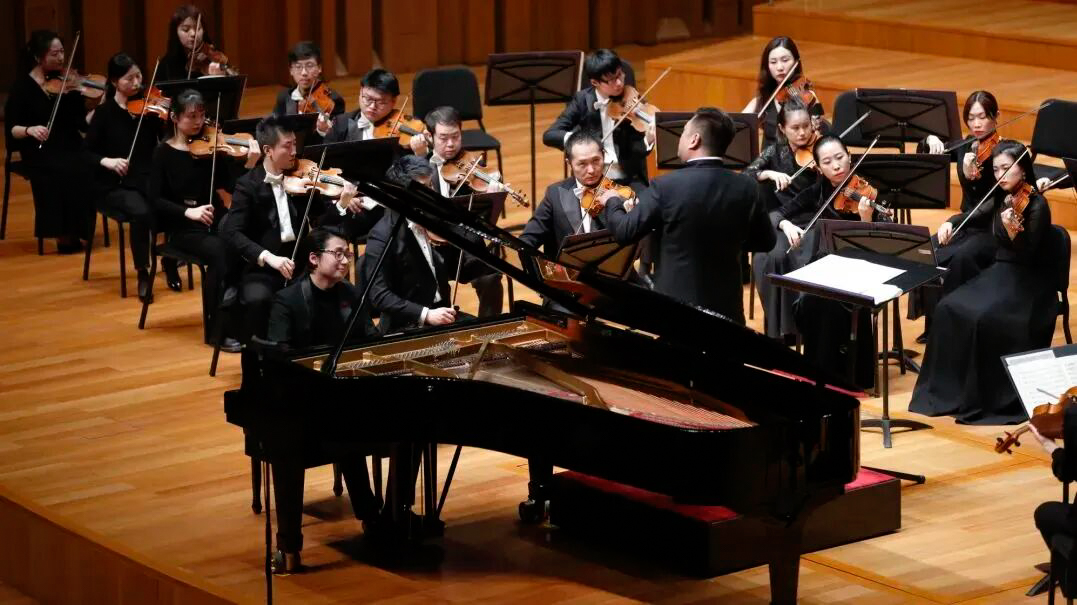
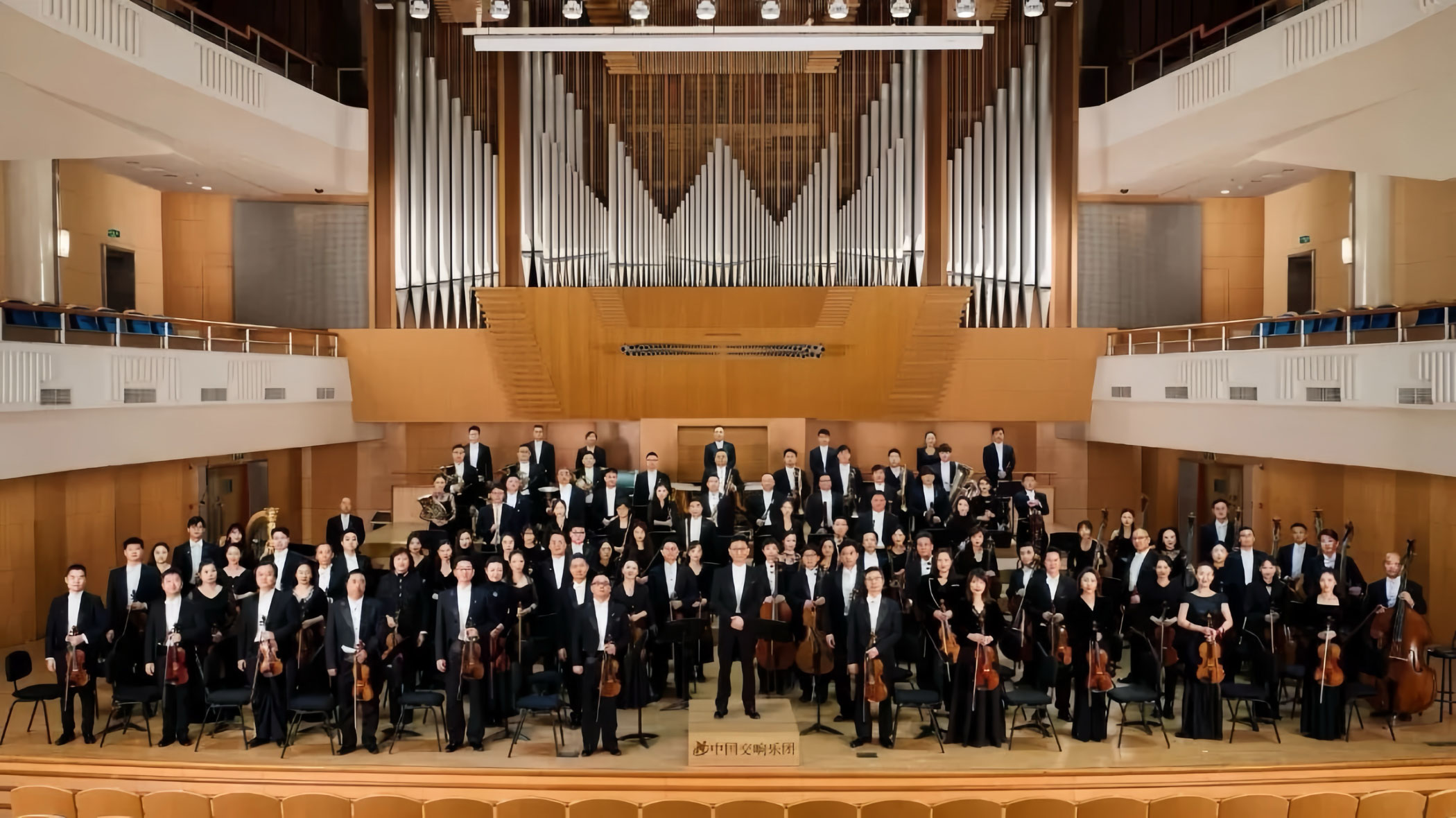
China National Symphony Orchestra
Founded on the legacy of the Central Philharmonic Orchestra (est. 1956), the CNSO is one of China’s premier state ensembles under the Ministry of Culture and Tourism. The orchestra has performed for major national and diplomatic occasions and toured across five continents, serving as a cultural ambassador of Chinese artistry.
Its collaborations with world-renowned conductors and soloists — from Ormandy, Karajan, and Maazel to Yo-Yo Ma, Anne-Sophie Mutter, Siqing Lu, and Lang Lang — have established its reputation as a leading symphonic voice of China on the global stage.
Concept