


In the Name of Romance:
Encountering Schubert
Zhengzhong Zhou × Hong Xu
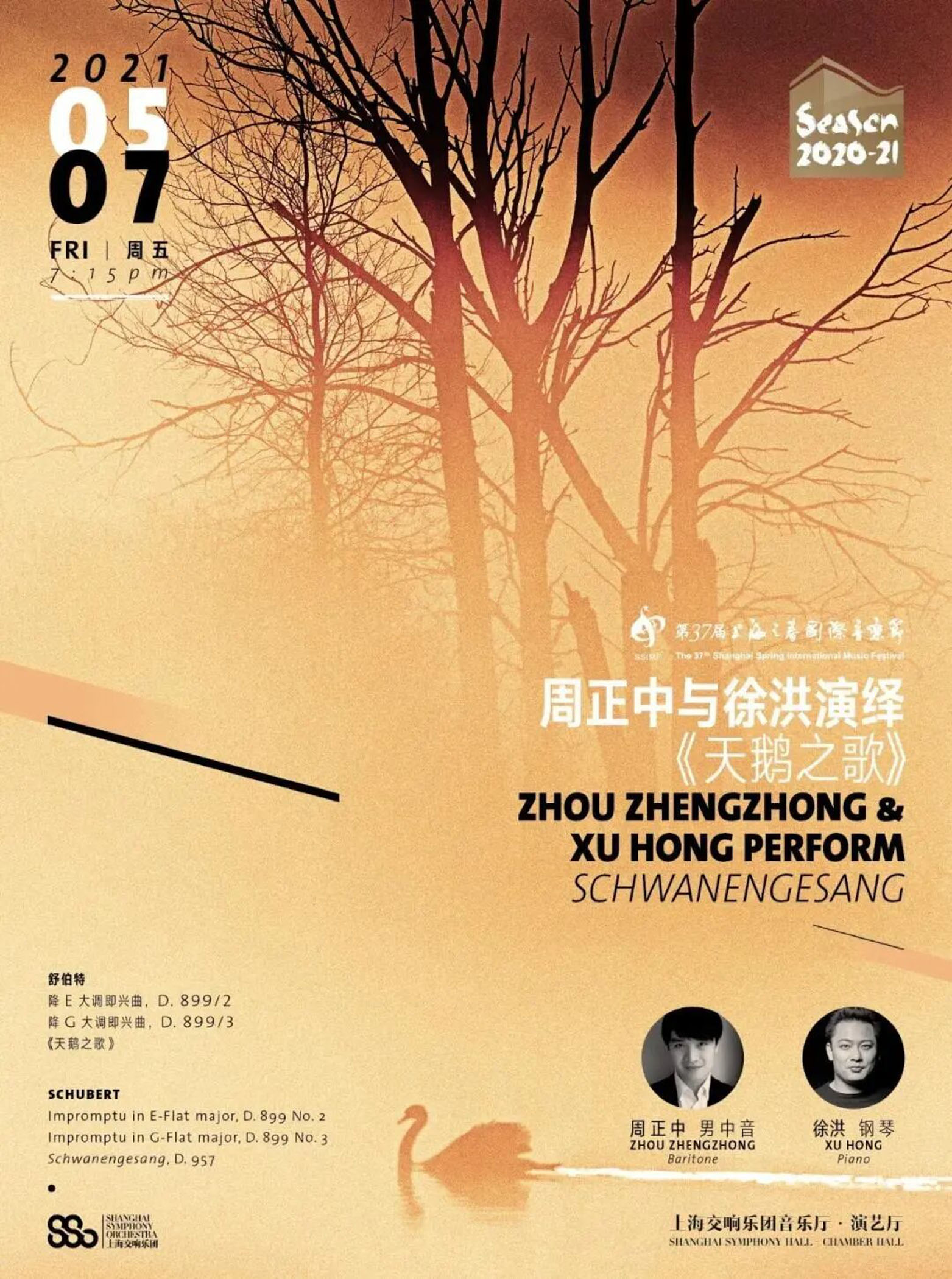
Schubert Schwanengesang — Baritone Recital
Shanghai Symphony Hall · Chamber Hall
Overview
“Schubert’s music poeticizes sound itself—with delicacy, sincerity, and boundless emotional depth.”
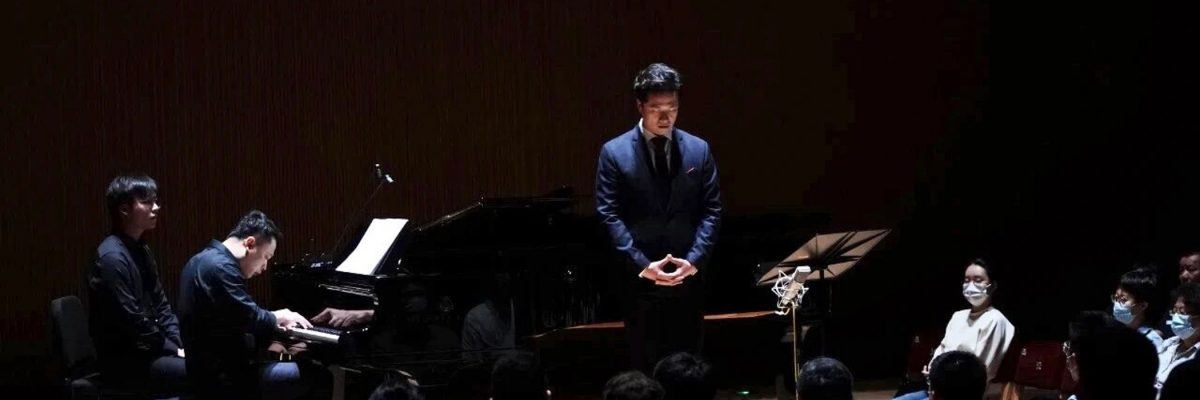
Under the title In the Name of Romance: Encountering Schubert, baritone Zhengzhong Zhou and pianist Hong Xu joined forces for an evening devoted to Schubert’s lyric universe. The recital wove together Schwanengesang and two piano Impromptus (D.899/2 and D.899/3), creating a musical arc from intimacy to transcendence—where voice and keyboard “sing of the brief eternal: a touch of melancholy, a trace of tenderness, moments of romance and haze, with emotions flowing quietly between.”
“We often think of Schubert as light and radiant,” Zhou reflected, “yet the atmosphere of Schwanengesang grows heavier as it unfolds. It reminds me of the past year, when our lives were disrupted by the pandemic and filled with unresolved loss.
As someone from Wuhan, I feel this cycle especially deeply. The final song, Die Taubenpost, reverses the entire tone—turning toward hope. Like Schubert’s Nacht und Träume, it says: ‘Listening with joy, we call for dawn.’ It reminds us that we must continue to hope and set forth again.”
Programme
Franz Schubert (1797–1828)
• Impromptu in E-flat major, D.899/2 — Piano Solo (Hong Xu)
• Impromptu in G-flat major, D.899/3 — Piano Solo (Hong Xu)
• Franz Schubert — Schwanengesang, D.957 (complete)
Liebesbotschaft (Message of Love)
Kriegers Ahnung (A Warrior’s Foreboding)
Frühlingssehnsucht (Longing for Spring)
Ständchen (Serenade)
Aufenthalt (Resting Place)
In der Ferne (Far Away)
Abschied (Farewell)
Der Atlas
Ihr Bild (Her Portrait)
Das Fischermädchen (The Fisher-Maiden)
Die Stadt (The City)
Am Meer (By the Sea)
Der Doppelgänger (The Wraith)
Die Taubenpost (The Pigeon Post)
Gallery
Notes on the Music
The two Impromptus serve as lyrical mirrors to the songs:
• The E-flat major (D.899/2) flows with courtly grace, its melodic arcs recalling a Viennese waltz seen through tears.
• The G-flat major (D.899/3), often called Schubert’s most beautiful, shimmers like water in constant motion—a dream sustained by gentle arpeggios.
Together with Schwanengesang, they form a journey from shadow to light, from introspection to renewal—an inner narrative framed entirely within Schubert’s own voice.
Artists
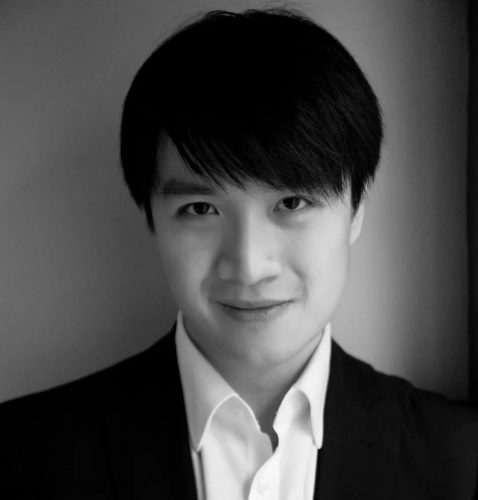
Zhengzhong Zhou — Baritone
One of China’s most accomplished baritones, Zhengzhong Zhou is a laureate of the Marmande International Vocal Competition (Opera First Prize, Mélodie Second Prize) and the Toulouse International Singing Competition. After training at CNIPAL (Marseille), he joined the Jette Parker Young Artist Programme of the Royal Opera House, Covent Garden, and subsequently became a principal soloist at Deutsche Oper Berlin.
His repertoire spans more than forty major roles, including Conte Almaviva (Le nozze di Figaro), Marcello (La Bohème), Valentin (Faust), Figaro, Rigoletto, Don Giovanni, and Sharpless (Madama Butterfly). He has collaborated with world-renowned conductors such as Sir Antonio Pappano, Donald Runnicles, Andris Nelsons, Sir Mark Elder, Seiji Ozawa, John Eliot Gardiner, Daniel Oren, Yu Long, and Lü Jia, and performed with the London Symphony Orchestra, Orchestre National de France, Shanghai Symphony Orchestra, NCPA Orchestra, and Hong Kong Philharmonic.
His recordings include Massenet’s Werther (Deutsche Grammophon), Manon’s Portrait (Opera Rara), and multiple Royal Opera House DVDs (Anna Nicole, Rigoletto, Tosca, Madama Butterfly).
Beyond his international career, Zhou serves as Professor of Voice at Wuhan Conservatory of Music, where he has guided numerous prize-winning students and directed full-scale operatic productions, including Don Giovanni, La Bohème, and L’elisir d’amore.
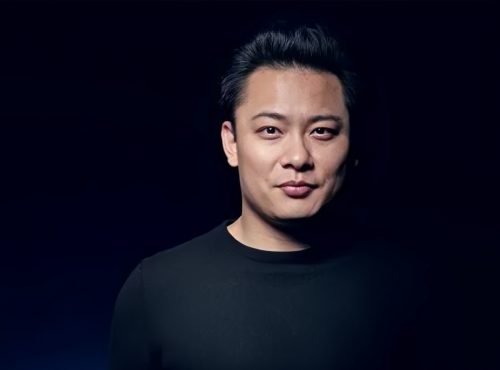
Hong Xu — Piano
Praised by The New York Times for “brilliant technique, keen insight, and limitless potential,” pianist Hong Xu is one of China’s most respected concert artists and educators. A laureate of multiple international competitions—including the Gina Bachauer, Hilton Head, and Honens—he was the only pianist in 2010 to receive The Juilliard School’s Artist Diploma, together with the prestigious Arthur Rubinstein Prize.
Xu has performed with leading orchestras such as the London Philharmonic, BBC Symphony Orchestra, Russian National Orchestra, Calgary Philharmonic, Hong Kong Philharmonic, China NCPA Orchestra, and Beijing Symphony, appearing at Carnegie Hall, Kennedy Center, Royal Festival Hall, Barbican Centre, Wigmore Hall, Shanghai Symphony Hall, and National Centre for the Performing Arts (Beijing).
An active chamber musician, he has collaborated with distinguished artists including Lü Siqing, Qin Liwei, Wang Tao, Sun Yingdi, and Zhengzhong Zhou, and frequently performs across Asia, Europe, and North America.
Since returning to China, Xu has served as Associate Professor of Piano at Wuhan Conservatory of Music, where his students have garnered top prizes at major international and national competitions. He is also a sought-after lecturer, hosting public masterclasses and outreach projects in collaboration with Eastman School of Music, Oberlin Conservatory, San Francisco Conservatory, NYU, and Royal Trinity College London. His live-streamed masterclass series has reached millions of viewers, expanding the accessibility of classical music education in China.
Artist’s Reflection
“Unlike Die schöne Müllerin or Winterreise, Schwanengesang is not a continuous narrative but a constellation of poems—seven by Rellstab, six by Heine, and one by Seidl—each linked by an undercurrent of longing and loss.
Rellstab was known as a music critic—the very one who named Beethoven’s Moonlight Sonata—and these seven poems were originally meant for Beethoven. By chance they passed to Schubert, who turned them into his final masterpiece.
During preparations for a Beethoven anniversary concert in 2020, I learned this connection and felt it deeply. In that same year, messages between friends often carried dread—truths and falsehoods blurred, and many lives were silenced on unresolved chords. I feared that any message I sent might never be answered. Perhaps that’s why I found resonance in Schwanengesang.
The songs fall continuously downward—into memory, loss, and self-confrontation—until the very last one, Die Taubenpost, suddenly turns the weight of grief into a luminous ascent. It is as if Schubert, at the end of his life, distilled all suffering into a single gesture of hope.
‘The message that will never be received, the unbearable yearning for eternity—perhaps the dove still flies, carrying not despair but the smallest spark of human longing.’
For me, that dove is hope itself.”
Zhou’s Reflections on Schwanengesang